

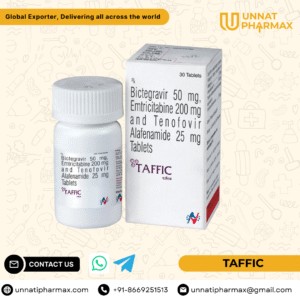
Taffic Tablets is a prescription antiretroviral medicine used in the treatment of Human Immunodeficiency Virus (HIV-1) infection. It is a fixed-dose combination of three powerful antiviral agents: Bictegravir 50 mg, Emtricitabine 200 mg, and Tenofovir Alafenamide 25 mg. This advanced formulation helps suppress viral replication, improve immune function, and reduce the risk of HIV-related complications.
Manufactured by Hetero Healthcare, Taffic Tablets are widely used as a once-daily complete HIV treatment regimen, offering convenience, efficacy, and improved patient adherence. It is recommended for adults and adolescents weighing at least 25 kg, as prescribed by a healthcare professional.
Active Ingredients & Composition
Each film-coated tablet of Taffic Tablets contains:
-
Bictegravir – 50 mg
-
Emtricitabine – 200 mg
-
Tenofovir Alafenamide – 25 mg
These three active substances work together to block different stages of the HIV life cycle, ensuring maximum viral suppression.
How Taffic Tablets Work
Taffic Tablets combine three antiretroviral agents, each with a distinct mechanism of action:
1. Bictegravir
Bictegravir is an integrase strand transfer inhibitor (INSTI). It blocks the HIV integrase enzyme, preventing viral DNA from integrating into the host cell’s genome.
2. Emtricitabine
Emtricitabine is a nucleoside reverse transcriptase inhibitor (NRTI) that interferes with HIV’s ability to replicate by blocking reverse transcriptase.
3. Tenofovir Alafenamide
Tenofovir Alafenamide is also an NRTI, designed to deliver tenofovir more efficiently to infected cells with lower systemic exposure, reducing kidney and bone toxicity.
Together, these ingredients help reduce the HIV viral load to undetectable levels when taken consistently.
Uses of Taffic Tablets
Taffic Tablets are primarily used for:
-
Treatment of HIV-1 infection
-
Initial therapy for newly diagnosed HIV patients
-
Maintenance therapy in virologically suppressed patients
-
Reducing HIV viral load in the blood
-
Improving immune system function
-
Lowering the risk of HIV transmission when viral load is suppressed
⚠️ Note: Taffic Tablets do not cure HIV but help control the infection and improve quality of life.
Benefits of Taffic Tablets
-
Once-daily dosing for better compliance
-
Strong viral suppression
-
Lower risk of drug resistance
-
Improved kidney and bone safety profile
-
Suitable for long-term HIV management
-
WHO-recommended combination therapy
How to Take Taffic Tablets
-
Take one tablet once daily
-
Can be taken with or without food
-
Swallow the tablet whole with water
-
Take it at the same time every day for best results
Do not crush, chew, or split the tablet unless advised by your doctor.
Dosage & Administration
Recommended Dose
-
One tablet daily for adults and adolescents (≥25 kg)
Missed Dose
-
If you miss a dose, take it as soon as you remember
-
If it is almost time for your next dose, skip the missed dose
-
Do not take two doses at the same time
Overdose
In case of overdose, seek immediate medical attention or contact a poison control center.
Directions for Use
-
Follow your doctor’s prescription strictly
-
Do not stop taking Taffic Tablets without medical advice
-
Regular blood tests may be required to monitor liver and kidney function
-
Maintain consistent daily intake to avoid resistance
Safety Information & Warnings
Prescription Only Medicine (Rx)
Taffic Tablets should be used only under medical supervision.
Before Taking Taffic Tablets, Inform Your Doctor If You Have:
-
Liver disease (including hepatitis B or C)
-
Kidney problems
-
Bone disorders
-
Pregnancy or breastfeeding
-
Any known drug allergies
Pregnancy & Breastfeeding
Use during pregnancy only if clearly needed. Breastfeeding is generally not recommended for HIV-positive mothers.
Different Brand Names Available in the Market
The same active ingredients (Bictegravir + Emtricitabine + Tenofovir Alafenamide) are available under different brand names, including:
-
Taffic Tablets
-
Other generic combinations by approved manufacturers
Availability may vary by country and regulatory approval.
Frequently Asked Questions (FAQs)
Is Taffic Tablets a cure for HIV?
No. It controls HIV infection but does not cure it.
Can Taffic Tablets be taken long term?
Yes, it is designed for long-term HIV management under medical supervision.
Can I stop taking Taffic Tablets if I feel better?
No. Stopping treatment may lead to viral resistance.
Is Taffic Tablets safe for daily use?
Yes, when taken as prescribed by a healthcare professional.
Why Choose Taffic Tablets?
-
Trusted manufacturer: Hetero Healthcare
-
WHO-recommended antiretroviral components
-
Proven clinical effectiveness
-
Global demand and acceptance
-
High patient compliance due to once-daily dosing
Unnati Pharmax is Authroized dealer of Pharmaceutical medicine in all over the globe.
NIH (Clinical Info HIV) – Antiretroviral Drugs



Reviews
There are no reviews yet.