

Product Overview:
Temozolomide is an oral chemotherapy drug used primarily to treat brain tumors, such as glioblastoma multiforme and anaplastic astrocytoma. It is an alkylating agent that works by damaging the DNA of cancer cells, preventing their growth and spread. International Trade name for temozolomide is Temodar
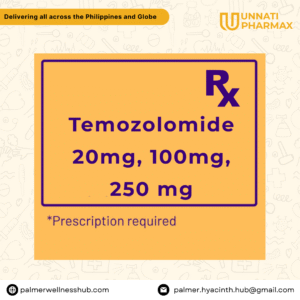
Available in 20 mg, 100 mg, and 250 mg strengths, Temozolomide is prescribed based on body surface area and treatment cycle protocols.
Uses:
-
Treatment of glioblastoma multiforme (GBM) (newly diagnosed or recurrent)
-
Treatment of anaplastic astrocytoma
-
Off-label uses may include other CNS tumors as guided by oncologist
How It Works:
Temozolomide belongs to the class of alkylating agents. It enters the brain easily and works by interrupting the replication of cancer cell DNA, eventually causing cell death.
Dosage & Administration:
-
Taken orally, once daily, often for 5 days in a 28-day cycle
-
Always taken on an empty stomach, 1 hour before or 2 hours after meals
-
Doses vary by body weight, type of tumor, and clinical protocol
⚠️ Strictly follow your oncologist’s instructions. Blood counts should be monitored regularly.
Possible Side Effects:
-
Nausea or vomiting
-
Fatigue
-
Loss of appetite
-
Low white blood cell counts
-
Increased infection risk
-
Constipation or headache
Storage & Handling:
-
Store at room temperature (20°C to 25°C)
-
Keep in original packaging
-
Keep out of reach of children
-
Dispose of unused capsules safely
Why Buy from Palmer Wellness Hub?
-
💊 100% genuine oncology-grade medications
-
🌍 Fast global shipping (including to the Philippines & India)
-
🔒 Discreet packaging & cold-chain handling
-
🩺 Trusted by healthcare providers & cancer patients worldwide
Frequently Asked Questions (FAQ) for Temozolomide (20 mg, 100 mg, 250 mg)
Basics & Mechanism of Action
1. What is Temozolomide?Temozolomide is a powerful oral chemotherapy drug used to treat specific types of brain tumors. It belongs to a class of medications known as alkylating agents, which work by stopping cancer cells from making new DNA, thus preventing them from growing and multiplying.
2. What types of cancer is Temozolomide used to treat? It is primarily used to treat brain tumors in adults, most notably:
- Glioblastoma Multiforme (GBM): Used in newly diagnosed patients in combination with radiation therapy, and then as a maintenance treatment.
- Anaplastic Astrocytoma: Used for patients with a type of brain tumor that has not responded to other chemotherapy drugs.
3. How does Temozolomide work to kill cancer cells? Temozolomide is converted in the body into an active compound (MTIC). This compound damages the DNA of cancer cells by adding a methyl group to it (a process called methylation). This DNA damage is so severe that it triggers the cancer cells to die, a process known as apoptosis.
4. Is Temozolomide a traditional chemotherapy drug?Yes, it is considered a chemotherapy drug. However, unlike many traditional chemotherapies that are given intravenously (by IV), Temozolomide has the advantage of being an oral capsule, allowing it to be taken at home.
5. What are the common brand names for Temozolomide? The original and most widely recognized brand name is Temodar® (in the United States and some other regions) or Temodal® (in Europe, the Philippines, and other parts of the world). Generic versions are also available in many countries under various names.
Dosage & Treatment Cycles
6. Why does Temozolomide come in different strengths like 20 mg, 100 mg, and 250 mg? The different strengths allow your oncologist to prescribe a precise dose tailored to your body. Doctors combine various capsule strengths to create the exact daily dose you need, which prevents the need for splitting or altering capsules.
7. How is the specific dose of Temozolomide determined? Your daily dose is calculated by your oncologist based on your Body Surface Area (BSA), which takes into account your height and weight. The dose may also be adjusted based on your blood counts and how well you tolerate the treatment.
8. What is a typical treatment cycle for Temozolomide? A common schedule for maintenance therapy is the “5/28” cycle. This means you take Temozolomide once a day for 5 consecutive days, followed by 23 days of rest with no medication. This 28-day period constitutes one full treatment cycle.
9. My doctor mentioned the “Stupp protocol.” What is that? The Stupp protocol is the standard of care for newly diagnosed glioblastoma (GBM). It involves an initial phase where you take a daily low dose of Temozolomide concurrently with radiation therapy for about six weeks. This is followed by several cycles of higher-dose maintenance Temozolomide (on the 5/28 schedule).
10. How should I take my Temozolomide capsules? You should take Temozolomide on an empty stomach—either one hour before a meal or at least two hours after a meal—to improve its absorption and reduce nausea. It is often recommended to take it at bedtime. The capsules must be swallowed whole with a glass of water and should never be opened, chewed, or crushed.
Managing Side Effects
11. What are the most common side effects of Temozolomide?The most common side effects include nausea, vomiting, constipation, loss of appetite, fatigue, headache, and hair thinning or loss. Your medical team can provide medications and advice to help manage these.
12. How can I manage the nausea and vomiting from Temozolomide? Your oncologist will prescribe anti-nausea medications (anti-emetics) for you to take before your chemotherapy dose. Taking the Temozolomide at bedtime can also help you sleep through the worst of the nausea.
13. Will I definitely lose my hair while taking this medication? Hair loss with Temozolomide is possible but is usually not as complete or dramatic as with some other chemotherapy drugs. Most patients experience mild to moderate hair thinning rather than total baldness.
14. What is myelosuppression and why is it a concern with Temozolomide? Myelosuppression is a decrease in your bone marrow’s ability to produce blood cells. Temozolomide can lower your counts of white blood cells (neutrophils), red blood cells (hemoglobin), and platelets. This can increase your risk of infections, fatigue, and bleeding.
15. Why does my doctor need to perform frequent blood tests? Regular blood tests (a Complete Blood Count or CBC) are essential to monitor for myelosuppression. These tests allow your doctor to check your blood cell counts and adjust your dose or treatment schedule if they drop to unsafe levels.
Serious Risks & Precautions
16. What is PCP and why might I need medication to prevent it? When your white blood cell count is low from Temozolomide, you are at risk for opportunistic infections. One of the most serious is Pneumocystis jirovecii pneumonia (PCP). Your doctor will likely prescribe a preventative antibiotic (prophylaxis) to take during treatment to protect you from this specific infection.
17. Can Temozolomide affect my liver?Yes, liver injury is a possible, though less common, side effect. Your doctor will monitor your liver function with blood tests throughout your treatment.
18. Is it safe to have children while being treated with Temozolomide?No. Temozolomide can cause serious harm to a developing fetus.
- Female patients must not become pregnant while taking it.
- Male patients must use effective contraception as the drug can affect sperm. This is a critical topic to discuss with your oncologist before starting treatment, as the drug can also affect long-term fertility.
19. Can I receive vaccinations during my treatment? You should avoid live vaccines (like MMR or chickenpox) while on Temozolomide as your weakened immune system could develop the infection the vaccine is meant to prevent. Inactivated vaccines (like the flu shot) may be safe but might be less effective. Always consult your oncologist before getting any vaccine.
20. What are the signs of a serious reaction that require immediate medical attention? Contact your doctor or seek emergency care immediately if you experience signs of severe infection (fever, chills, sore throat), unusual bleeding or bruising, severe headache, confusion, seizures, or signs of a severe allergic reaction (rash, swelling of the face/throat, trouble breathing).
Practical & Logistical Questions
21. Can I drink alcohol during my treatment cycles? It is generally recommended to avoid or limit alcohol consumption. Alcohol can worsen side effects like nausea and fatigue and can put extra stress on your liver. Discuss this with your oncologist.
22. Are there any foods or supplements I should avoid? There are no specific foods that are strictly forbidden, but it’s important to maintain a healthy diet. You should not take any new medications or herbal supplements without first getting approval from your oncologist, as they could interfere with your treatment.
23. How should I handle and store the Temozolomide capsules at home?Store the capsules at room temperature, away from moisture and direct heat. Keep them in their original container and safely out of the reach of children and pets. As it is a chemotherapy drug, caregivers should avoid direct contact with the powder inside the capsules if one breaks.
24. How long does treatment with Temozolomide typically last? The duration of treatment varies greatly. For newly diagnosed glioblastoma, the initial phase with radiation is about 6 weeks, followed by at least 6 maintenance cycles (about 6 months). For other situations, you may continue treatment for as long as it is effective and tolerated.
25. Is Temozolomide covered by health insurance or national programs like PhilHealth in the Philippines? Coverage for chemotherapy drugs like Temozolomide depends on your specific country and insurance plan. In the Philippines, patients should consult directly with PhilHealth and their private health insurance provider to understand the coverage details, including the Z Benefit Package for Catastrophic Illnesses which may apply. Hospital social workers or your oncologist’s office can often provide assistance in navigating these financial and administrative processes.
Disclaimer: This information is for educational purposes only and is not a substitute for professional medical advice.
External Reference Links:
-
https://www.cancer.gov/about-cancer/treatment/drugs/enzalutamide
-
https://www.webmd.com/drugs/2/drug-165048/enzalutamide-oral/details
-
https://prostatecanceruk.org/prostate-information-and-support/treatments/enzalutamide
- https://www.mayoclinic.org/drugs-supplements/temozolomide-oral-route/description/drg-20066228


Reviews
There are no reviews yet.